The gay theatre group Homo Promos was founded in 1988 as a response to Section 28, which forbade councils from ‘intentionally promoting homosexuality’.
Section 28 got the chop in 2003, but all these years later Homo Promos marches on.
This website tells the story of its numerous productions, its community activities and its current plans.
Peter Scott‐Presland is the founder/director of Homo Promos and has written much of its material.
He has also been a journalist, historian, and songwriter, and is a compiler of crosswords.

Homo Promos Theatre Company has also received an International Award
To learn more about Homo Promos, explore the various pages of this website.
See our HP Shop page and the Digital Download of Coming Out - Ready or Not.
Stay in touch and get news of Homo Promos productions, and news and events for Paradise Press and Gay Authors Workshop by joining our Mailing List. Your details will be kept confidential and only used for this purpose.
Section 28 was an amendment slipped into the Local Government Act 1988 by two Tory backbenchers, David Wilshire and Dame Jill Knight, forbidding local authorities from 'intentionally promoting homosexuality or publishing material with the intention of promoting homosexuality' or 'promoting the teaching in any maintained school of the acceptability of homosexuality as a pretended family relationship.'
Margaret Thatcher's government supported it in exchange for getting Knight off the Health and Medicines Committee, where she was a pain. As legislation it was a paper tiger, since the Local Authority powers it claimed to curb were non-existent. They'd passed it to school governors; the horse had bolted. Nobody was ever prosecuted under Section 28, and Christian organisations which tried to invoke it were always sent packing.
Nevertheless the effect of the Act, which encouraged widespread confusion about what constituted 'promotion' of homosexuality, and to whom it applied, was to foster self-censorship in schools, in the arts and in advice services. Homo Promos, which chose its name deliberately as a provocation in response to the Section, was on the receiving end of this kind of action.
The Oval House Theatre in South London, which was partly funded by Lambeth Council, refused to take the play Double Vision, already contracted for, unless we changed the company name.
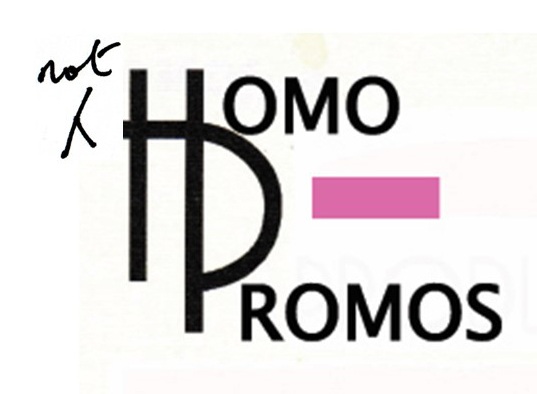
This was our response. And on this basis we went ahead, having highlighted the absurdity of the legislation.
Beyond this, there was damage done to a generation of young LGBT+ people, their friends and allies: warped sex education, a lack of safer sex information, and removal of gay books from libraries which all happened voluntarily, spurred on by fear of prosecution, or loss of funding.
We support the setting up of an enquiry to highlight the unquantifiable harm done between 1998 and 2003, when the section was repealed, to heighten awareness of the dangers of censorship and self-censorship. and to ensure that it cannot happen again.
Section 28 Justice Coalition launched a petition, calling for a public inquiry into the impact of Section 28 on LGBTQ+ people to get justice for those who lived through it and to give recommendations on how to stop anything like it ever happening again.
Their Dear Section 28 project is compiling an archive of personal experiences through letters addressed directly to the law and featuring a film called Don’t say gay which will be released later in 2026.
Section 28 was an amendment slipped into the Local Government Act 1988 by two Tory backbenchers, David Wilshire and Dame Jill Knight, forbidding local authorities from 'intentionally promoting homosexuality or publishing material with the intention of promoting homosexuality' or 'promoting the teaching in any maintained school of the acceptability of homosexuality as a pretended family relationship.'
Margaret Thatcher's government supported it in exchange for getting Knight off the Health and Medicines Committee, where she was a pain. As legislation it was a paper tiger, since the Local Authority powers it claimed to curb were non-existent. They'd passed it to school governors; the horse had bolted. Nobody was ever prosecuted under Section 28, and Christian organisations which tried to invoke it were always sent packing.
Nevertheless the effect of the Act, which encouraged widespread confusion about what constituted 'promotion' of homosexuality, and to whom it applied, was to foster self-censorship in schools, in the arts and in advice services. Homo Promos, which chose its name deliberately as a provocation in response to the Section, was on the receiving end of this kind of action.
The Oval House Theatre in South London, which was partly funded by Lambeth Council, refused to take the play Double Vision, already contracted for, unless we changed the company name.
Their Dear Section 28 project is compiling an archive of personal experiences through letters addressed directly to the law and featuring a film called Don’t say gay which will be released later in 2026.
Section 28 did untold harm to a generation of children, teachers and artists, especially LGBT+ writers. By forbidding local authorities from 'promoting homosexuality' as a 'pretended family relationship' it cast a repressive pall over all representations which were positive, and clouded any kind of advice in schools with fear and circumspection.
An enquiry into that untold harm is long overdue. Watch this Video about this campaign.
Section 28 did untold harm to a generation of children, teachers and artists, especially LGBT+ writers. By forbidding local authorities from 'promoting homosexuality' as a 'pretended family relationship' it cast a repressive pall over all representations which were positive, and clouded any kind of advice in schools with fear and circumspection.
An enquiry into that untold harm is long overdue. Watch this Video about this campaign.
Government Response: "The government recognises the harm done by Section 28. A previous Labour government repealed it, and this government is focused on advancing LGBT+ equality rather than a public inquiry."
Peter Scott-Presland
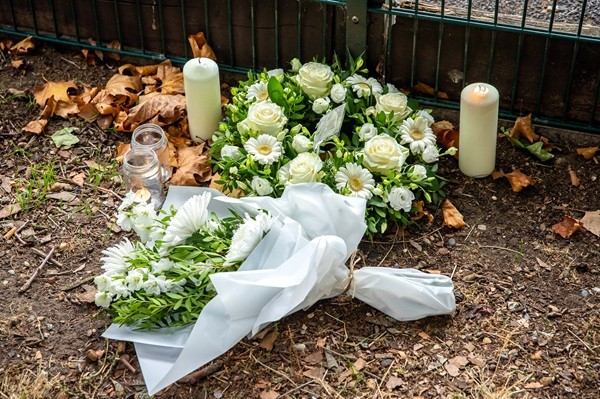
On 27 September 2026, before the launch party for Hot Flashes, we paid tribute to the gay martyrs who were hanged for sodomy at Horsemonger Gaol, now demolished.
The site is only 200 yards from the fabulous Rising pub where we held the launch. We told the story of Captain Henry Nicolls and his friend Lt Beauclerk who slit his own throat rather than swing.
On hand was Cllr Victor Chamberlain, who has a project to commemorate the last two men who were hanged for this offence and were held in the Gaol before their trial. We laid flowers and lit candles before returning to The Rising for the launch.
Read the SE Londoner reviewVideo of Event
Gay Authors Workshop and Homo Promos Theatre Group jointly organise FREE writing classes for young and fledgling LGBT+ writers, and those struggling to find ideas or transition to fiction.
These happen in seasons of four to five weeks, and we ask people to sign up for the series. For details about the next series:
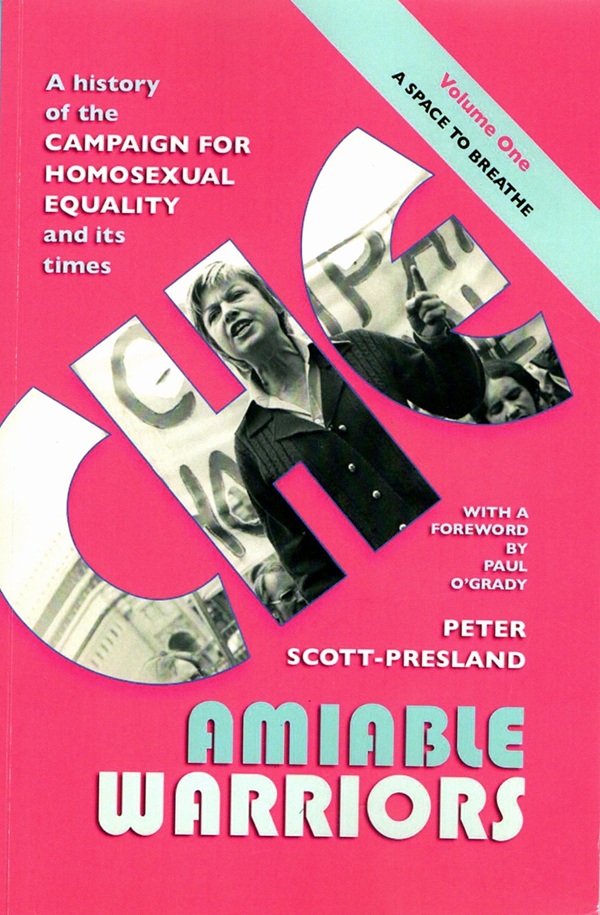
Amiable Warriors I: A Space to Breathe (1945 - 1970), which follows the fortunes of the ex-mineworker Allan Horsfall and two teenagers Martin Stafford and Paul Temperton fighting religious bigotry in an effort to start Esquire Clubs, is now available as a paperback.